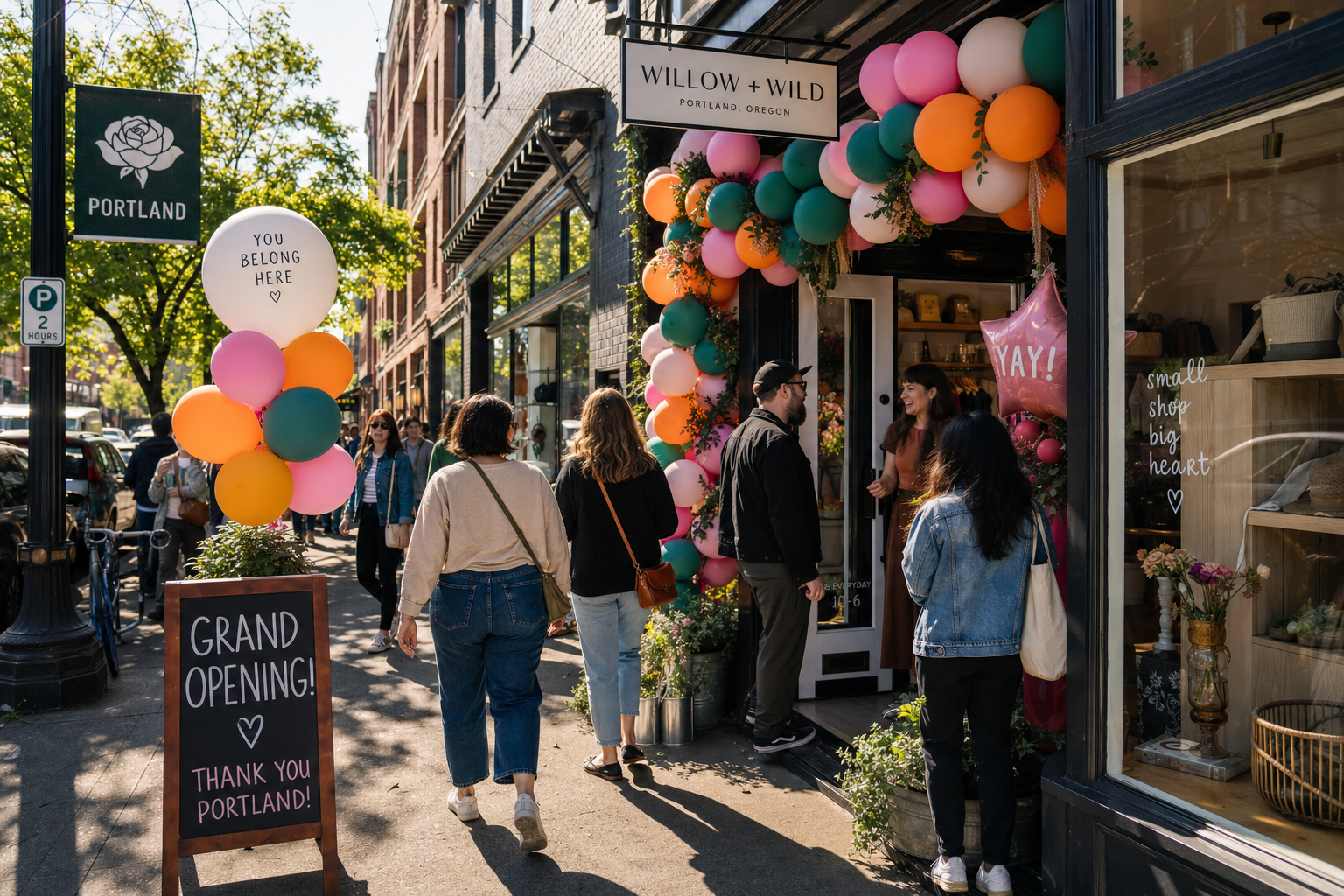
New businesses in Portland do not appear out of nowhere. Long before a grand opening sign goes up or a Google listing goes live, the signals are already present in public data — permit filings, state registrations, social media announcements, and early map activity. For anyone who works with businesses in their pre-launch or early-growth phase, learning to read those signals means reaching people at the most receptive moment in their business cycle, before they are overwhelmed with vendor outreach and before competitors have found them.
The Public Data Trail That Precedes Every Opening
Every new business in Portland leaves a trail across multiple public systems before it opens. The sequence is fairly predictable. A founder first registers the business entity with the Oregon Secretary of State — often months before any physical location is secured. If a commercial space is involved, a tenant improvement or commercial construction permit follows once a lease is signed and buildout begins. A sign permit is frequently one of the last permits filed, signaling that the business is approaching its opening. And somewhere in that timeline, a Google Business Profile may be created, a Facebook page launched, or an Instagram account started — often with a "coming soon" framing that is publicly visible.
Each of these signals has a different lag time relative to the actual opening. Business registrations can appear six months or more before launch. Permit filings typically come two to four months before opening. Sign permits are often filed four to eight weeks before launch. Social media announcements tend to cluster in the four to six weeks before opening. Understanding this timeline means you can identify businesses at the right stage for your specific offer — early enough to be useful, close enough to opening that the conversation is relevant.
Using Portland's Development Hub for Permit Intelligence
The City of Portland's Development Hub is one of the most useful free resources for tracking commercial activity in the metro area. It allows public searches by address, permit type, and application date. Filtering for tenant improvement permits and commercial construction permits filed in the past 30 to 90 days surfaces businesses that are actively preparing physical spaces.
The permit description field is often the most revealing part of the record. Descriptions like "new restaurant — full kitchen installation" or "retail buildout for clothing boutique" tell you the business type directly, without requiring additional research. The applicant and contractor names connect you to the people involved, and cross-referencing the address in Google Maps tells you whether a listing has already appeared or whether the location is still showing up as vacant commercial space.
Portland's neighborhoods each have distinct commercial character, and tracking permits by neighborhood allows you to focus on the areas most relevant to your work. The Pearl District, Division Street, Mississippi Avenue, SE Hawthorne, and NE Alberta Street are among the corridors where new businesses open regularly and where commercial landlords are actively seeking tenants. Monitoring permit activity in these neighborhoods over time gives you a running picture of what is in the pipeline.
New businesses in Portland need a website and Google Business Profile before they open — not after. Francisco Labs works with pre-launch and early-stage businesses to build the digital foundation that generates leads from day one. Let's talk before your opening day.
Oregon Secretary of State Registrations as an Early Signal
The Oregon Secretary of State's business registry allows searches by registration date, which means you can filter for entities registered in the past 30, 60, or 90 days in Multnomah County or the Portland metro area. New registrations represent businesses at the earliest possible stage — often before a physical location is secured and well before any public presence exists.
The entity name and registered agent information are public. Many new registrations are LLCs with names that hint at the business type — "Portland Bites LLC," "Pearl District Wellness," "Burnside Collective" — while others use more generic legal names that require a web search to connect to a specific business concept. The registration date, entity type, and registered agent address provide a starting point for additional research.
New registrations are highest-volume and most useful as a research source when combined with a geographic filter and a follow-up check against other sources. A registration that connects to an Instagram account that has already started posting about a "coming soon" Portland location, combined with a recent permit in the same neighborhood, represents a significantly more actionable lead than a registration alone.
Social Media Signals: Following the Announcements
Instagram and Facebook are where many Portland business owners announce their ventures to their personal networks before any formal marketing begins. Searches for hashtags like #portlandsmallbusiness, #pdxnewbusiness, #portlandopening, and neighborhood-specific tags surface announcements in real time. These posts are often the most candid, personal signal available — the owner sharing their excitement about a new venture with their existing community before they have a public-facing brand presence.
Following these hashtags over time, or setting up saved searches, creates a passive monitoring layer that surfaces new announcements without active searching. When an announcement matches something you have already seen in permit data or the Secretary of State registry, the convergence across multiple sources confirms that the business is real, active, and approaching launch.
Google Maps also surfaces early activity — businesses sometimes claim their Google listing in the weeks before opening, and these unverified or recently verified listings can appear in map searches for the address or business category. A new, recently verified Google Business Profile with minimal reviews and limited information is a strong indicator of a pre-launch business still building its online presence.
Building a Simple Monitoring System
Manually checking all of these sources every day is not practical for most people. The more sustainable approach is to check each source on a defined cadence — permit portal weekly, Secretary of State monthly, social hashtags a few times a week — and to document findings in a simple tracker. Over time, this creates a pipeline of businesses at different stages of their pre-launch journey, and the context you build about each one makes outreach more informed and more relevant.
For Portland specifically, the density of new business activity and the number of accessible public data sources make this kind of monitoring genuinely viable as a regular practice. No subscription required, no proprietary database, no specialized tools — just consistent attention to data that is publicly available and regularly updated across the city.
Help Portland's newest businesses launch with the right digital foundation
Francisco Labs builds websites and Google presence for Oregon businesses at every stage — from pre-launch to established. If you are opening something new or know someone who is, let's connect.
Start a Project