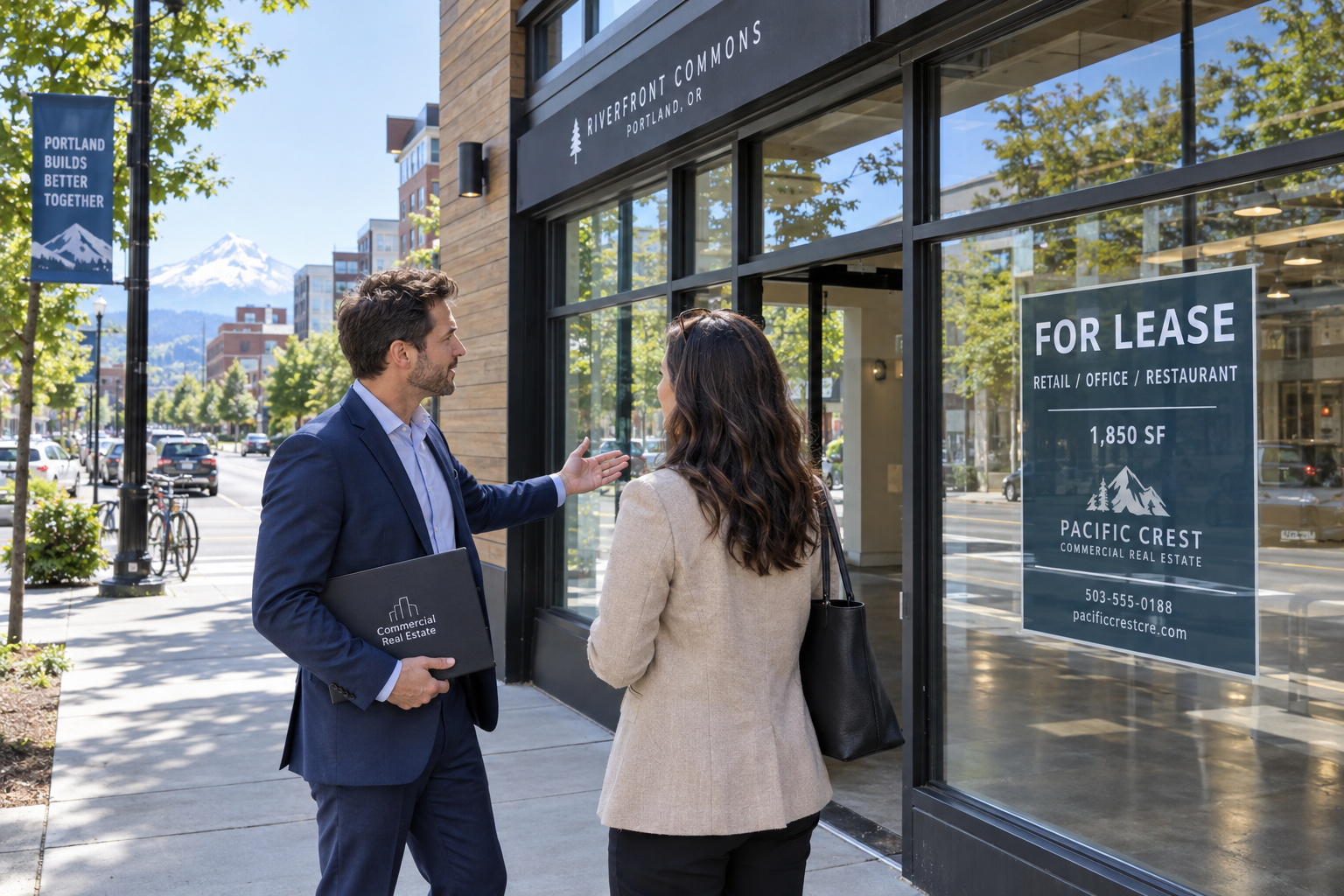
When a business signs a lease on a new commercial space in Oregon, they are usually weeks or months away from being ready to accept customers, but they are already in immediate need of services. A new tenant in a Portland strip mall or a Eugene office building needs a website, signage, cleaning services, point-of-sale systems, insurance, accounting, and a dozen other things before they open their doors. Service providers who can reach that new tenant during this pre-opening window, before competitors have even noticed the business exists, are operating at a meaningful advantage. Commercial real estate filings and permit activity are among the most reliable signals for identifying these opportunities early.
Why the pre-opening window matters
A new business that has already been operating for six months has usually made its key vendor decisions. It has a website provider or has decided to build one later. It has cleaning arrangements, an accountant, a phone system. The decisions have been made, and displacing an existing vendor is a harder sell than being the first to show up with a relevant offer.
The pre-opening window is different. A new tenant who just signed a lease is in active buying mode across multiple categories simultaneously. They have budget allocated for setup costs. They are responsive to outreach because they need to make decisions quickly. And because they are new to the area or new to operating a commercial space, they often have no existing relationships to default to. Being first creates a genuine advantage that later outreach cannot replicate.
Where commercial real estate activity becomes public record in Oregon
Oregon does not have a single statewide database of commercial lease signings, but several public record streams together paint a reliable picture of new tenant activity across the state.
Building permit applications are among the most useful. When a new tenant builds out or renovates a commercial space, they typically file for permits with the local jurisdiction. In Portland, those filings appear in the Bureau of Development Services permit portal. Eugene, Bend, Salem, and other Oregon cities maintain similar portals. A permit application for tenant improvement work at a commercial address is a strong indicator that a new business is moving in, often weeks before any public announcement.
Oregon Secretary of State business registry filings are another signal. When a new business entity registers with the state, the filing includes a registered address. A new LLC or corporation that lists a commercial address in a retail or office corridor is worth tracking. The registry is publicly searchable and updated regularly, making it one of the most accessible early indicators of new business formation statewide.
Commercial real estate listing services like LoopNet and CoStar track lease activity and sometimes surface recently leased properties before the new tenant has any public presence. Monitoring recently leased listings in target neighborhoods or zip codes can surface prospects that have not yet appeared in any other public database.
Combining signals for higher confidence
Any single data source has gaps. A new tenant improvement permit does not always identify the business by name. A Secretary of State filing does not always list a specific suite address. Combining multiple signals together produces a more complete picture and higher confidence that a given address represents a genuine new business opportunity.
A practical approach for Oregon markets is to check permit activity weekly, cross-reference new commercial addresses against the Secretary of State business registry, and then search for any social media or Google Business Profile presence at that address. A permit-stage business that has not yet claimed its Google listing, launched a website, or posted on social media is likely still in early setup, which makes it a strong candidate for outreach across multiple service categories at once.
Francisco Labs helps Oregon businesses build the digital systems that support proactive lead generation: From tracking new business activity in target markets to building the web presence that makes your outreach credible, we design the infrastructure that turns public data into consistent client opportunities. If you want a more systematic approach to finding new business in Oregon, let's talk.
Outreach timing and approach
Early outreach to a new tenant works best when it is genuinely helpful rather than generic. A message that references the specific address, acknowledges that they are in setup mode, and offers something relevant to that stage gets a meaningfully different response than a cold email that could have been sent to anyone.
For service businesses in Portland or other dense Oregon markets, showing up in person during business hours at a pre-opening commercial space can be more effective than any digital outreach. A brief, professional introduction with a leave-behind that includes a specific offer is often more memorable than an email that gets lost in a crowded inbox during a chaotic pre-opening period. The key is making the interaction feel like a useful resource showing up at the right time, not an unsolicited sales call.
For businesses that serve a broader geography across Oregon, a short personal email that references what you noticed about their new location, offers a specific relevant service, and asks a single clear question tends to outperform template-heavy outreach. Personalization signals that you did real research, which builds credibility before any relationship has been established.
Building a repeatable tracking system
The businesses that consistently find new tenants early are not doing one-off searches. They have built lightweight, repeatable systems that surface new activity automatically or with minimal weekly effort. For most Oregon service businesses, this does not require expensive software.
A simple system might combine a saved search in a local permit portal, a weekly check of Secretary of State new filings filtered by city, and a Google Alert for commercial addresses in target neighborhoods. Each of these is free. Together they create a passive early-warning network that surfaces new tenant activity across Oregon markets before the new businesses appear anywhere online.
As the system matures, the outreach process can be standardized as well. A consistent approach to researching each new prospect, a short message template that gets personalized with specific details, and a follow-up schedule creates a lead generation workflow that runs alongside regular business operations without requiring significant time investment each week. The compounding effect of consistently reaching new Oregon businesses at the earliest possible moment builds a pipeline that most competitors, who rely on referrals or reactive marketing, are not building at all.
Ready to reach new Oregon businesses before anyone else does?
Francisco Labs builds the digital systems and lead generation infrastructure that help service businesses find and convert new prospects systematically. Let's build your early-mover advantage.
Start a Project