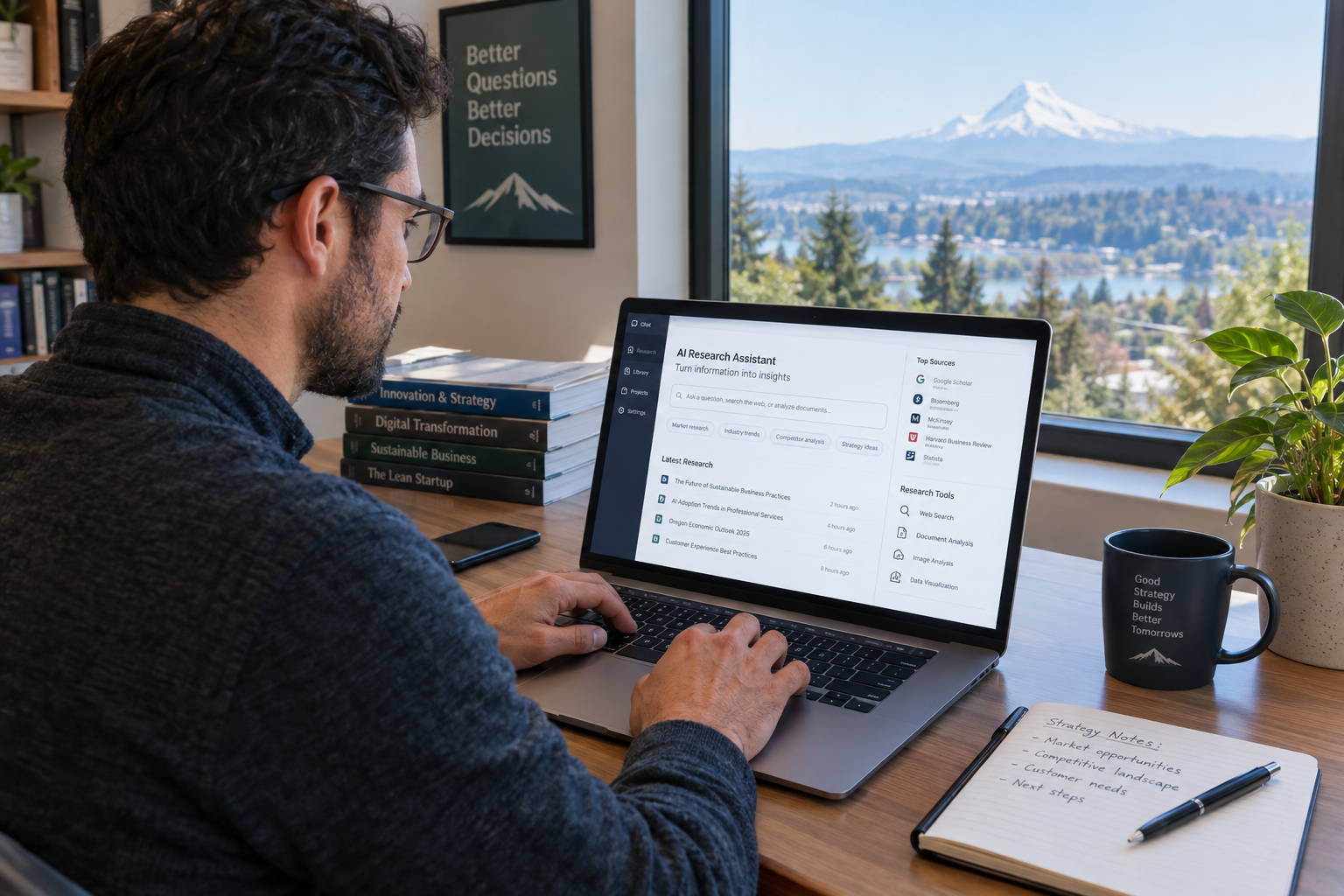
AI tools help Oregon consultants most with the slow, repetitive parts of outreach: researching a business, summarizing what they find, drafting a first version of a message, and keeping follow-ups organized. They help least with the parts that build trust, such as judging whether a business is a good fit, adding a real personal observation, and deciding when not to send a message at all. The consultants getting good results treat AI as a fast assistant, and they keep a human in charge of every message that goes out.
Where AI saves the most time
Most outreach work is not writing the message. It is the preparation before it. Understanding a business, finding the right contact, and noticing something useful can take longer than the email itself. This is where AI tools earn their place.
- Summarizing a business website into a few plain sentences about what the company does and who it serves
- Pulling out the details that matter from public pages, such as services, service areas, and hours
- Organizing notes from many businesses into a consistent format
- Suggesting questions worth asking in a first conversation
For someone researching dozens of businesses across Portland, Salem, and Eugene each week, shaving a few minutes off each one adds up quickly.
Drafting messages without sounding robotic
AI is also useful for first drafts, but unedited AI writing is easy to spot. Generic openings, inflated compliments, and perfectly polished phrases make a message feel like a mass mailing, and busy owners delete those quickly.
A better workflow is to give the tool your own observation and ask it to tighten the wording. Start with one specific, true detail, such as a slow mobile page or an unclaimed profile, then use AI to make the message shorter and clearer. Read the result aloud. If it does not sound like something you would say to someone in person, rewrite it. Keep the tone plain, avoid hype, and make it easy for the person to say no.
Francisco Labs combines smart tools with real local expertise: We use modern research and automation to work efficiently, then bring human judgment to every website, local search plan, and client conversation. If you want help building a practical, trustworthy outreach and web presence for your Oregon business, let's talk.
Organizing follow-up and tracking
Many outreach efforts fail because follow-up is inconsistent, not because the first message was bad. AI features inside common tools can help by drafting short reminders, summarizing past conversations, and flagging contacts who have not been reached recently.
Even so, a simple spreadsheet or lightweight customer tracker is enough for most consultants. Record the business, the date, what you noticed, what you sent, and what happens next. Let the tools handle reminders and summaries, while you decide who deserves another touch and who has clearly said no.
Where AI falls short
AI tools can sound confident while being wrong, so anything factual needs checking. A tool might invent a service a business does not offer, misstate a location, or confuse two companies with similar names. Sending a message with a wrong detail damages trust faster than sending no message.
- Always verify names, addresses, and claims against the business's own website or profile
- Never let a tool send messages automatically without your review
- Avoid pasting private client information into tools you do not fully understand
- Do not use AI to fabricate results, testimonials, or numbers
Respect for the recipient matters too. Follow the rules for commercial email, honor any request to stop, and avoid anything that feels like pressure.
Choosing tools without overspending
New AI products appear constantly, and it is easy to pay for several that overlap. Before subscribing to anything, ask what specific task it will replace and how you will know it is working. Many consultants find that one general-purpose assistant, plus the features already built into their email and tracking tools, covers nearly everything they need.
Try free tiers first, run a small test on a handful of local businesses, and compare the results with how you worked before. If a tool saves real time without lowering the quality of your messages, keep it. If it mostly adds complexity, cancel it. Keeping your setup simple also makes it easier to protect client information and to explain your process honestly when someone asks how you work.
A practical, human-first approach
The Oregon consultants who succeed with AI tend to follow a simple pattern. They use the tools for research, organization, and rough drafts, and they apply their own judgment for fit, tone, and timing. They send fewer messages, but each one is relevant and carefully checked.
If you are just starting, pick one task to improve, such as summarizing business websites, and use it for a couple of weeks before adding anything else. Measure what actually helps, whether that is time saved or better conversations, and drop what does not. The goal is not to automate relationships. It is to free up more time for the conversations that matter with the local businesses you want to help.
Want a stronger web presence for your Oregon business?
Francisco Labs builds fast, mobile-first websites and local search foundations for businesses across Oregon. Let's talk about what you need.
Start a Project